What Is Last Mile Delivery — And Why Does Everyone Keep Talking About It?
If you have ever ordered a product online, tracked a package nervously as it sat at a distribution hub for days, or waited at home for a courier that somehow could not find your street — you already understand last mile delivery, even if you never called it that.
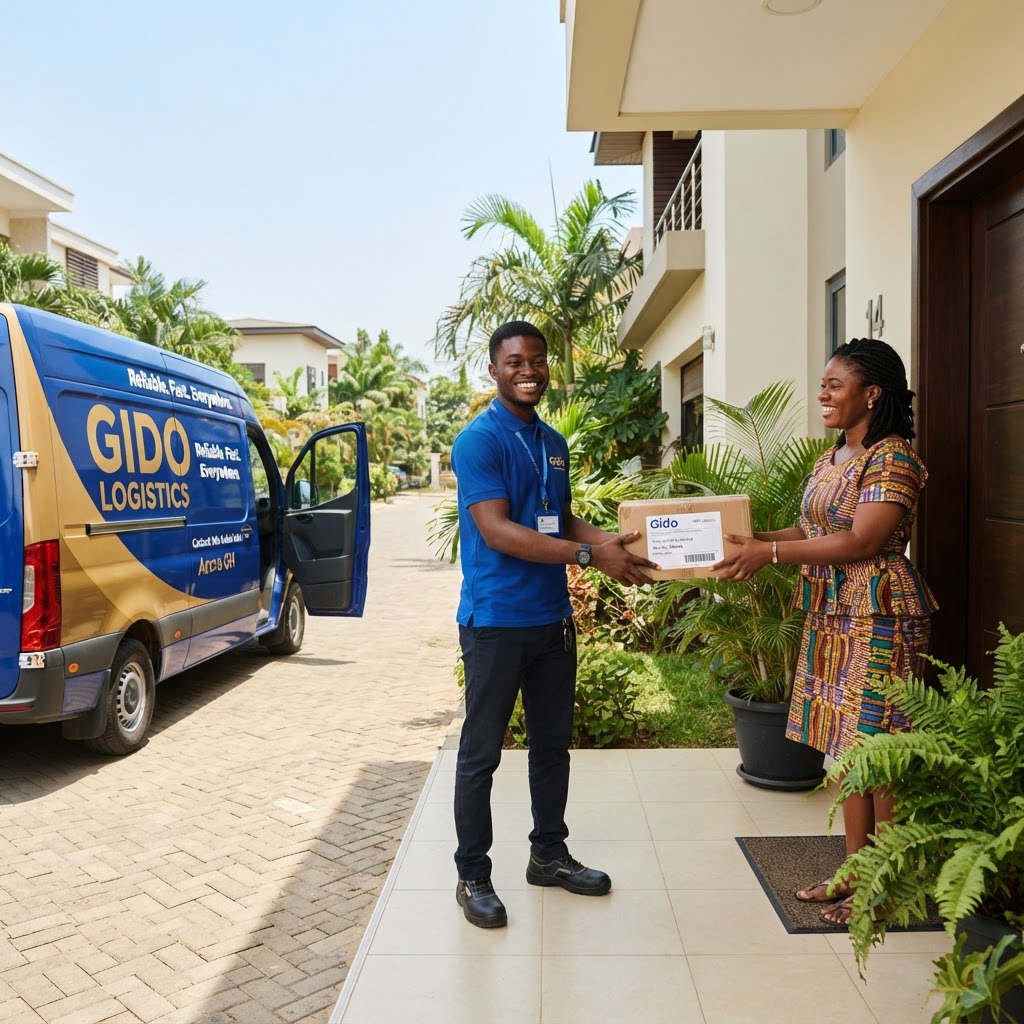
Last mile delivery refers to the final stage of the logistics journey: moving a product from a warehouse, fulfillment center, or distribution hub directly into the hands of the end customer. It sounds simple enough. But in practice — especially across Ghana and the wider African continent — it is arguably the most complex, expensive, and consequential step in the entire supply chain.
At Gido Logistics Ltd, a subsidiary of GIDO Group Ltd, we have spent years navigating the real terrain of Ghanaian roads, communities, and commerce. We know firsthand what it takes to get a parcel from point A to point B when point B is down an unpaved road in Tamale, a busy compound house in Kumasi, or a rapidly growing estate outside Tema. This article breaks down what last mile delivery really means, why it is so challenging across Africa, and how smart logistics partners are turning those challenges into competitive advantages.
The Last Mile Problem: More Complex Than It Sounds
The term "last mile" is a little misleading. In reality, this final leg of delivery could be one mile or fifty miles. What defines it is not distance but complexity — the point at which parcels leave a consolidated route and travel to individual, often unpredictable, destinations.
Globally, last mile delivery accounts for 53% of total shipping costs, according to industry research. In Africa, that figure can climb even higher due to infrastructure gaps, addressing system challenges, and the sheer geographic diversity of markets like Ghana.
Why Last Mile Delivery Is So Challenging in Ghana
Ghana has made remarkable strides in commerce and connectivity over the last decade. E-commerce is growing rapidly. Mobile money platforms like MTN MoMo have transformed how people pay for goods and services. More Ghanaian businesses than ever are offering delivery. Yet several structural challenges continue to make last mile logistics genuinely difficult:
1. Addressing and Wayfinding Gaps While Ghana's digital addressing system (GhanaPostGPS) has been a significant step forward, adoption is still uneven. Many residential and commercial addresses remain informal — described as "near the red building" or "behind Atomic Junction." For delivery drivers, this turns every drop-off into a mini-investigation.
2. Road Infrastructure Ghana's road network has improved considerably, but a significant proportion of roads — particularly in peri-urban and rural areas — remain unpaved, unmarked, or seasonally impassable. During the rainy season, routes that are navigable in April can become completely inaccessible by July.
3. Traffic Congestion in Urban Centers Anyone who has tried to drive through Accra's Kwame Nkrumah Circle during rush hour knows that urban congestion is a serious logistical factor. Delivery windows are hard to predict, fuel costs spike, and customer satisfaction suffers when drivers spend hours stuck in traffic with temperature-sensitive or time-critical cargo.
4. Customer Availability and Failed Deliveries Failed first-time deliveries are one of the costliest problems in last mile logistics worldwide. In Ghana, where many people work outside the home, live in shared compounds, or may not have consistent mobile network access, arranging successful handoffs requires proactive communication and flexibility.
5. Diverse Terrain Across Regions From the coastal urban density of Greater Accra to the savannah landscapes of the Upper East Region, Ghana is geographically diverse. A logistics strategy that works beautifully in Accra may be entirely impractical in Bolgatanga or Wa. Effective last mile delivery requires regional intelligence, not just a national template.
Why Last Mile Delivery Matters for Ghanaian Businesses
Whether you are a small Ghanaian e-commerce entrepreneur, an FMCG brand distributing across multiple regions, a pharmaceutical company, or a multinational managing supply chains on the continent, your last mile strategy directly impacts your bottom line and your brand reputation.
Customer Experience Is Won or Lost in the Last Mile
Your customer does not see your warehouse. They do not witness your careful inventory management or your optimized routing algorithms. What they see — and what they remember — is the moment the delivery arrives. Was it on time? Was it in good condition? Was the driver courteous? Did the process feel professional?
In a market like Ghana where word-of-mouth and social media reviews carry enormous weight, a poor last mile experience can undo months of brand-building work. Conversely, a smooth, reliable delivery experience creates loyal customers who come back and refer others.
E-Commerce Growth Is Raising the Stakes
Ghana's e-commerce sector is growing at a pace that would have seemed ambitious just five years ago. Platforms like Jumia, Tonaton, and a growing ecosystem of home-grown Ghanaian online stores are driving more parcel volumes than ever. As consumer expectations rise — shaped partly by global platforms and their fast delivery promises — the pressure on logistics providers to deliver accurately and quickly intensifies.
For businesses operating in this space, partnering with a logistics provider that genuinely understands last mile delivery in Ghana is not a luxury. It is a necessity.
How Gido Logistics Approaches Last Mile Delivery
At Gido Logistics Ltd, we do not believe in copy-pasting logistics solutions from Europe or Asia and hoping they work in Accra. Our approach is built from the ground up to serve African realities.
Technology-Driven Route Optimization
We use modern route optimization tools that factor in real-time traffic data, road conditions, and delivery clustering to ensure our drivers take the most efficient paths. This reduces fuel costs, delivery times, and the environmental footprint of our operations — all at once.
Local Knowledge, Regional Reach
Our teams include drivers and logistics coordinators with deep knowledge of their operating areas. This hyperlocal expertise means we can navigate informal addresses, communicate effectively with customers across different languages and dialects, and solve problems on the ground that no algorithm alone can anticipate.
Proactive Customer Communication
We keep customers informed at every step of the delivery journey. From dispatch notifications to real-time tracking updates and estimated arrival windows, we minimize the anxiety of waiting and the cost of failed deliveries. When issues arise, our customer service team resolves them quickly.
Flexible Delivery Options
We understand that not every customer can receive deliveries at home during working hours. That is why we offer flexible delivery scheduling, pickup point options, and same-day delivery capabilities for clients in key urban centers — giving recipients control over how and when they receive their goods.
Handling Diverse Cargo Types
From fragile electronics and perishable food items to pharmaceutical products and bulk consumer goods, Gido Logistics has the vehicles, packaging expertise, and trained personnel to handle diverse cargo safely. We treat every consignment as if it were our own.
The Future of Last Mile Delivery in Africa
Africa's logistics industry is at an exciting inflection point. Investment in logistics technology, infrastructure, and last mile innovation is accelerating across the continent. Several trends are shaping what the next decade of last mile delivery will look like in Ghana and beyond.
Electric Vehicles and Sustainable Logistics
As fuel costs remain a significant operational expense and environmental awareness grows, electric motorcycles and light vehicles are beginning to enter last mile delivery fleets across African cities. Their lower running costs and suitability for urban environments make them a compelling option for the years ahead.
Data and Predictive Analytics
The more deliveries a logistics company completes, the smarter it gets — if it is capturing and analyzing the right data. Predictive analytics can help logistics providers anticipate demand surges, optimize staffing, and proactively identify delivery hotspots before problems arise.
Collaborative Logistics Models
Shared delivery infrastructure — where multiple businesses use the same distribution network — is gaining traction as a way to make last mile logistics more cost-effective, particularly in lower-density markets. This model benefits smaller businesses that cannot justify dedicated fleets.
Drone and Alternative Delivery Technologies
While still at an early stage in most of Africa, drone delivery has already been piloted successfully for medical supplies in Rwanda and Ghana. As regulatory frameworks mature, these technologies could play a meaningful role in reaching remote communities that are currently underserved by traditional logistics.
Choosing the Right Last Mile Delivery Partner in Ghana
If you are a business looking to improve your delivery operations in Ghana, here is what to look for in a logistics partner:
- Proven local experience: Do they understand Ghanaian roads, customs, and customer expectations?
- Technology integration: Can they offer real-time tracking, digital proof of delivery, and seamless API connections with your systems?
- Flexibility and scalability: Can they handle your peak periods without compromising service quality?
- Transparent pricing: No hidden fees, no surprise surcharges.
- Strong communication: Do they keep you and your customers informed at every step?
Gido Logistics Ltd ticks every one of these boxes. We are not just a delivery company — we are a logistics partner invested in the success of your business and the satisfaction of your customers.
Final Thoughts
Last mile delivery is where logistics becomes personal. It is the moment when global supply chains, careful planning, and hard work all converge into a single, human interaction at someone's door. Getting it right in Ghana requires more than trucks and drivers — it requires deep local knowledge, smart technology, genuine customer care, and a commitment to continuous improvement.
At Gido Logistics Ltd, we are proud to be part of Ghana's growing logistics story. Whether you are shipping across Accra or delivering to the furthest corners of the country, we are here to make sure your last mile is never your weakest link.
Ready to transform your delivery operations? Contact Gido Logistics Ltd today and let's build a smarter last mile strategy together.