Food is not just sustenance — it is dignity, stability, and hope. Yet across sub-Saharan Africa, millions of people wake up each morning uncertain about their next meal. In Ghana, a country blessed with fertile soils, generous rainfall, and hardworking farming communities, food insecurity remains a persistent challenge that demands urgent, intelligent, and sustained action.
At Gido Agro Ltd, a subsidiary of GIDO Group Ltd, we believe that food security is not a distant dream — it is an achievable reality when the right investments, technologies, and partnerships come together. This article explores what food security truly means, why it matters so deeply in the Ghanaian and African context, and how modern agribusiness is charting a bold new course toward a fed and thriving continent.
What Does Food Security Really Mean?
The term "food security" gets used often, but it carries layers of meaning that are worth unpacking. According to the United Nations Food and Agriculture Organization (FAO), food security exists when all people, at all times, have physical, social, and economic access to sufficient, safe, and nutritious food that meets their dietary needs and food preferences for an active and healthy life.
Break that definition down and you find four critical pillars:
1. Availability
There must be enough food produced or imported to meet the population's needs. This is about yields, harvests, and supply chains.
2. Access
Even when food is available, people must be able to afford it or obtain it. Poverty, poor roads, and market inefficiencies can keep food out of reach even when it exists in abundance.
3. Utilization
Food must be safe, nutritious, and properly prepared. Poor storage, contamination, and lack of nutritional knowledge undermine this pillar every day.
4. Stability
A household might be food secure today but vulnerable to shocks — floods, droughts, price spikes, or conflict. Long-term food security requires resilience.
Understanding these four pillars helps explain why food security is not simply a farming problem. It is a governance challenge, an infrastructure challenge, and above all, a human challenge.
The State of Food Security in Ghana and Africa
Ghana has made commendable strides in reducing hunger over the past two decades. The country met the Millennium Development Goal of halving the proportion of hungry people ahead of schedule. Yet today, an estimated 6 to 7 million Ghanaians — roughly 20 percent of the population — still face food insecurity in some form, with rural communities and the northern regions disproportionately affected.
Across the broader African continent, the numbers are sobering. The African Development Bank estimates that Africa spends over $35 billion annually importing food — a staggering figure for a continent that holds 60 percent of the world's uncultivated arable land. The irony is profound. Africa has the land, the water, the sunlight, and the human capital to feed itself and much of the world. What has been missing is investment, innovation, and coordinated effort.
Climate change is adding pressure to an already strained system. Erratic rainfall patterns, rising temperatures, and increasingly unpredictable growing seasons are threatening smallholder farmers across Ghana and West Africa. The farmers who produce the majority of Ghana's food — small-scale, often subsistence-level producers — are among the most vulnerable to these shocks and the least equipped to adapt without support.
Why Agribusiness Is Central to the Solution
Government policy and international aid have important roles to play in addressing food insecurity. But history has shown, time and again, that sustainable food systems are built by the private sector working in tandem with communities and governments — not by any single actor alone.
Agribusiness — the commercial dimension of agriculture that spans production, processing, storage, distribution, and retail — is uniquely positioned to drive food security at scale. Here is why:
Creating Market Linkages for Smallholder Farmers
One of the biggest challenges facing Ghanaian farmers is not growing food — it is selling it. Millions of smallholders produce crops that rot in the field or sell at exploitative prices because they lack access to reliable markets. Agribusiness companies that build fair and transparent market linkages transform this dynamic. When farmers know they have a guaranteed buyer at a fair price, they invest in better seeds, better practices, and higher yields.
Driving Investment in Processing and Value Addition
Raw agricultural commodities command lower prices and are more vulnerable to spoilage. When Ghana processes its tomatoes into paste, its cocoa into chocolate, and its cassava into high-quality flour, it captures more value, creates more jobs, and reduces post-harvest losses that currently account for up to 40 percent of some crop yields. Value addition is not just a business strategy — it is a food security strategy.
Improving Storage and Cold Chain Infrastructure
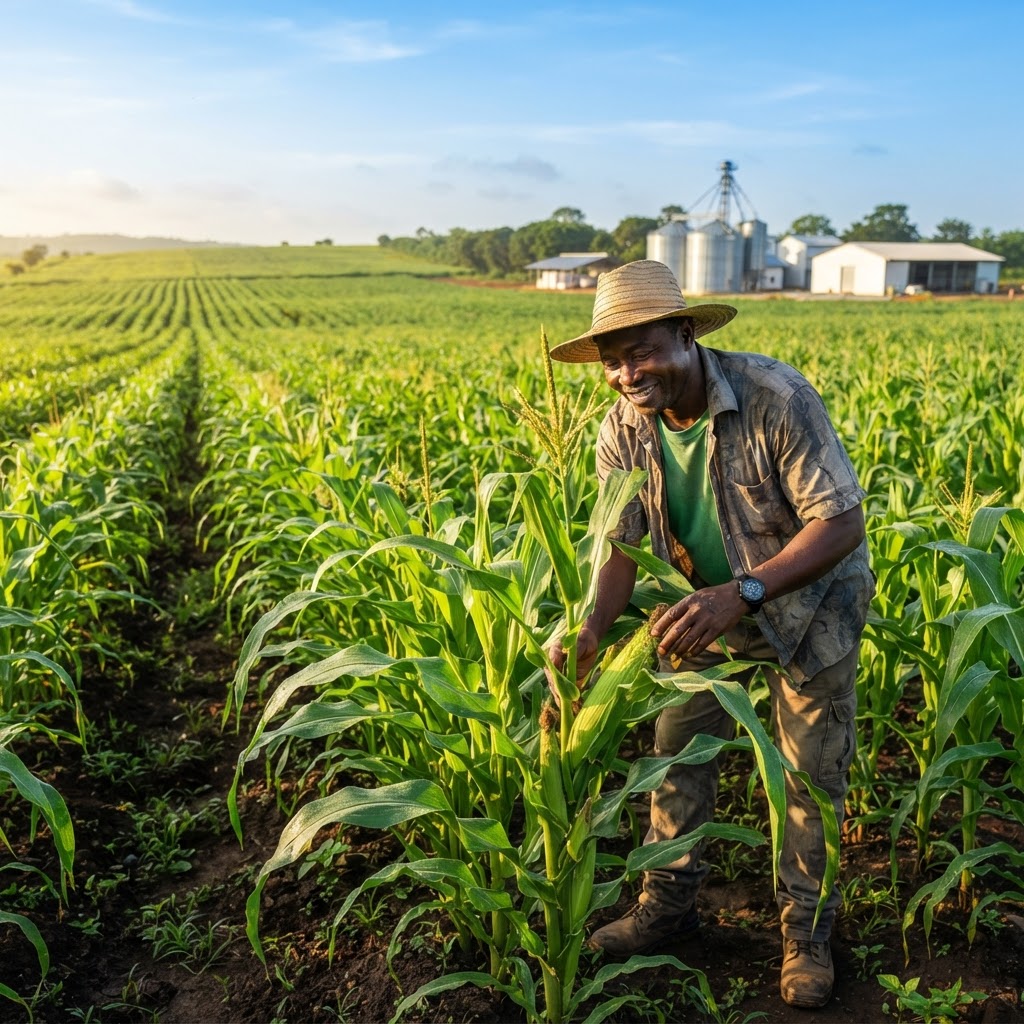
Post-harvest losses are one of Africa's most devastating and least discussed food security challenges. Grain spoiled by poor storage, vegetables that wilt before reaching urban markets, and fish that go bad without refrigeration represent enormous waste. Investment in storage facilities, cold chain logistics, and modern warehousing directly translates into more food reaching more people.
Promoting Climate-Smart Agriculture
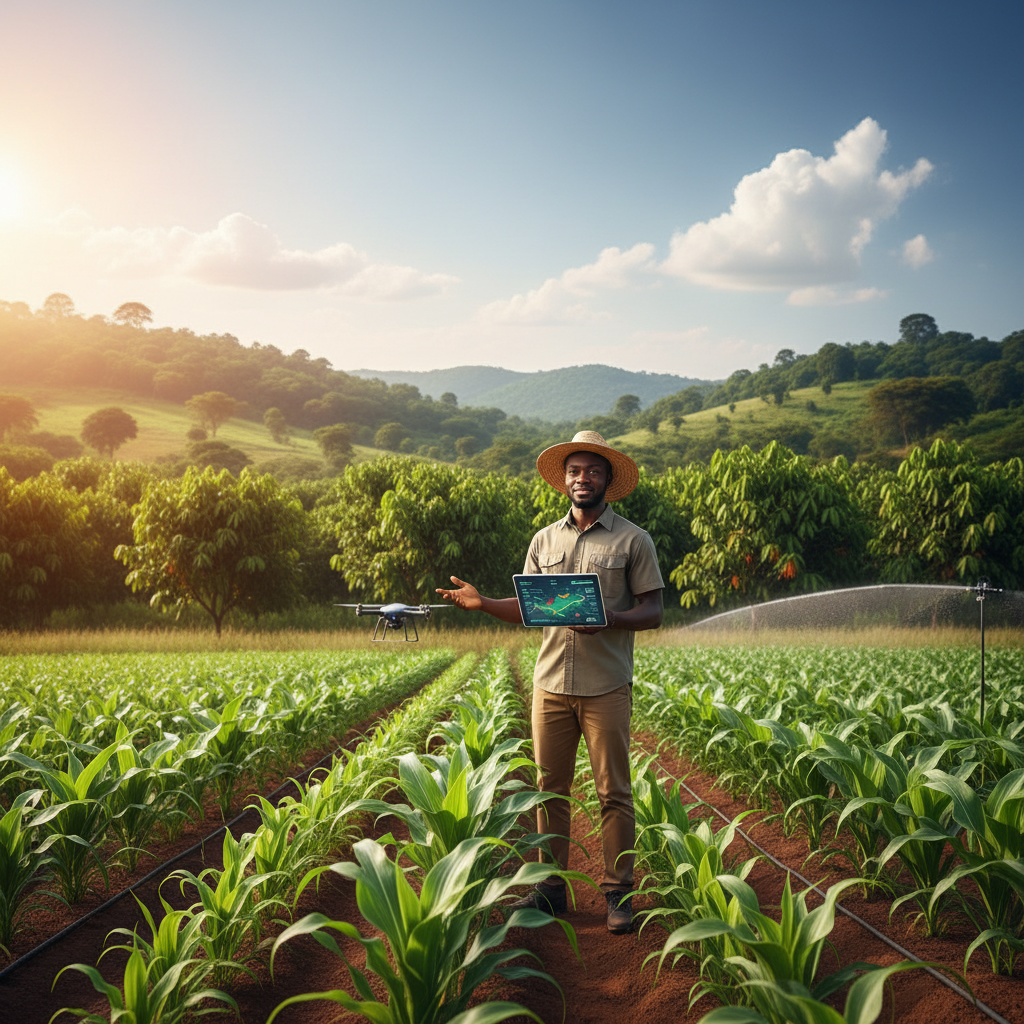
The agriculture of tomorrow must look different from the agriculture of yesterday. Drought-resistant crop varieties, precision irrigation, soil health management, and integrated pest management are not luxuries — they are necessities in a changing climate. Forward-thinking agribusiness companies are investing in these technologies and transferring knowledge to farming communities across Ghana.
Gido Agro Ltd: Our Commitment to Food Security in Ghana
At Gido Agro Ltd, food security is not just a policy talking point. It is the heartbeat of everything we do. As part of the broader GIDO Group Ltd family, we operate with a clear conviction: a food-secure Ghana is a more prosperous, more stable, and more equitable Ghana.
Our approach is grounded in three core commitments:
Empowering Local Farmers
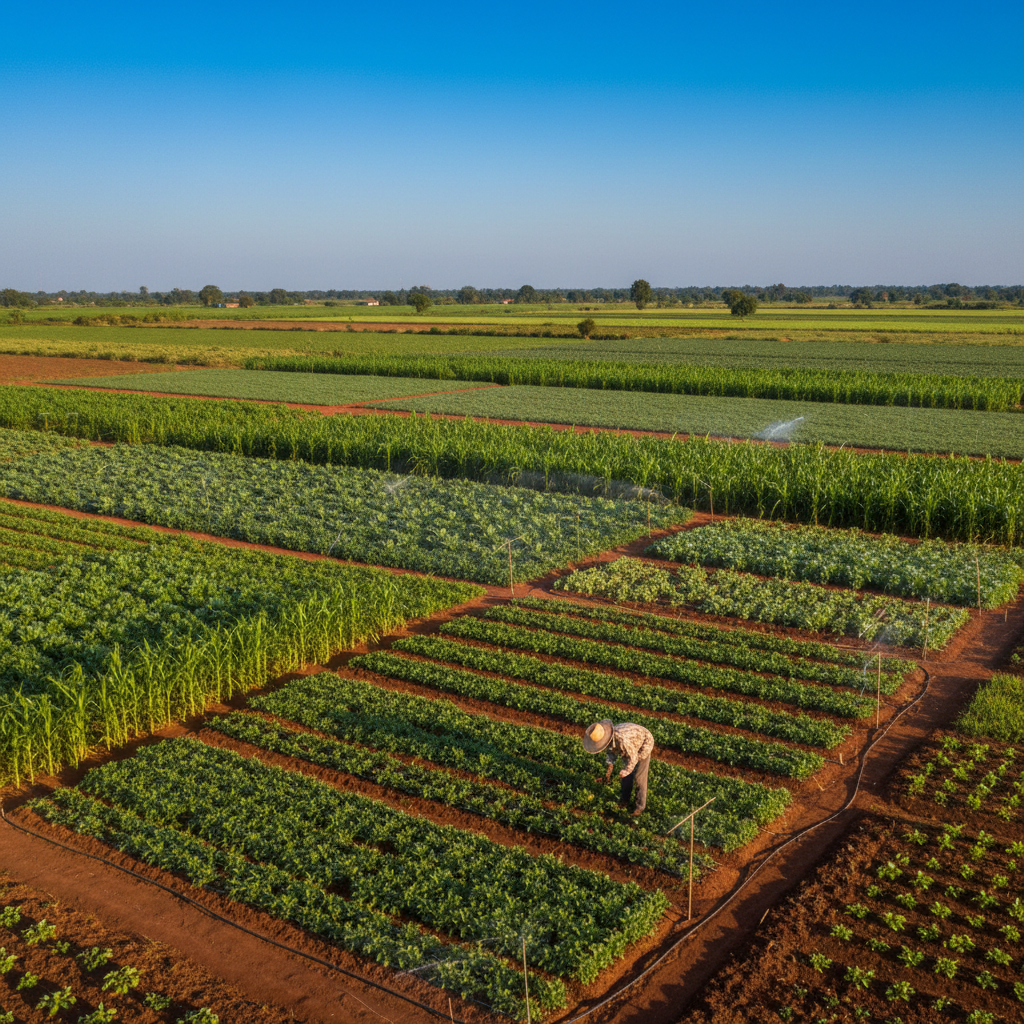
We work closely with smallholder farmers across Ghana, providing access to quality inputs, technical training, and market connections. We believe that the Ghanaian farmer — resourceful, resilient, and deeply knowledgeable about local conditions — is the foundation of national food security. Our role is to amplify what they already do well.
Investing in Sustainable Production
Sustainability is not a buzzword for us. It is a business imperative and a moral obligation. We are committed to farming practices that protect soil health, conserve water, and reduce environmental degradation — ensuring that the land can continue to produce abundantly for generations to come.
Building Resilient Supply Chains
A fragile supply chain is a food security risk. We invest in logistics, storage, and distribution infrastructure that keeps food moving efficiently from farm to table, reducing losses and ensuring that Ghanaian communities have reliable access to nutritious food year-round.
The Role of Technology in Transforming Agriculture
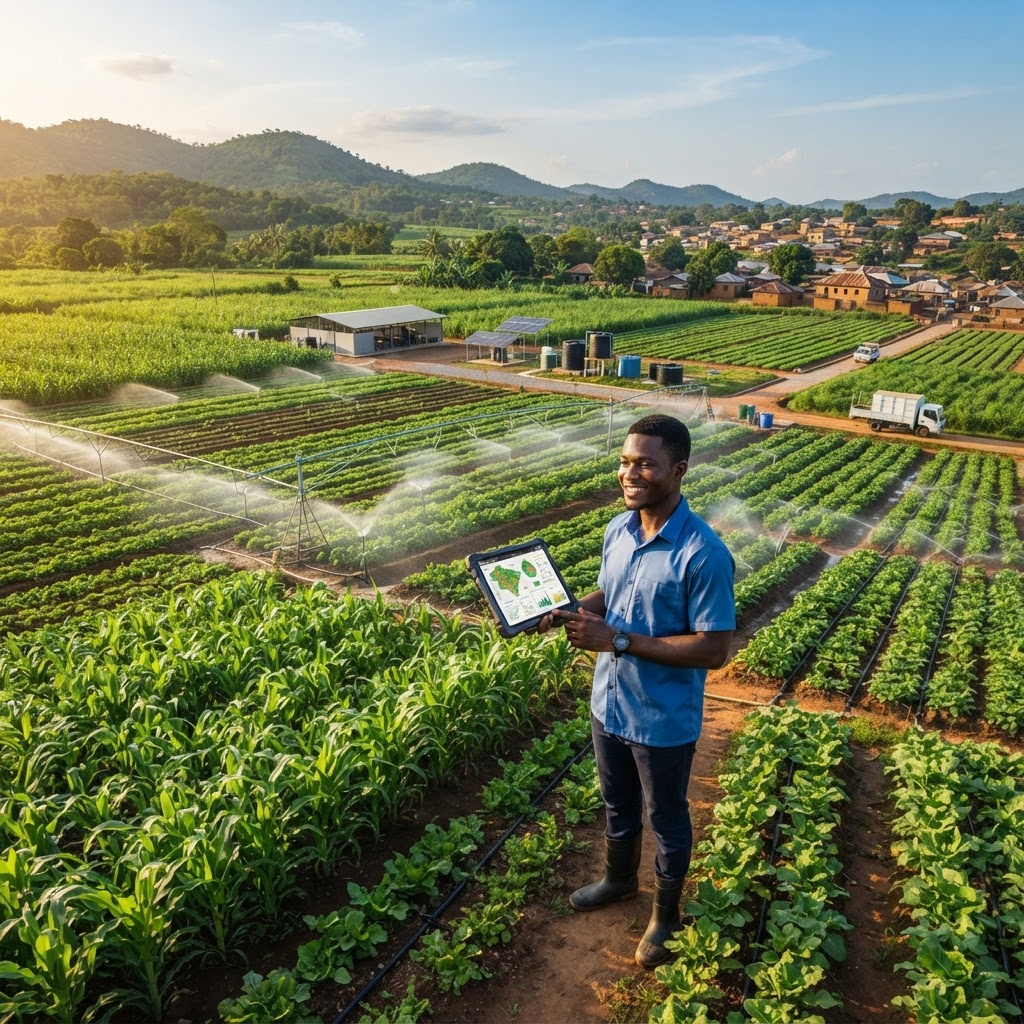
Across Africa, a new generation of agricultural technology is emerging that holds enormous promise for food security. From mobile-based extension services that deliver farming advice directly to rural phones, to satellite imagery that helps identify crop stress before it becomes crop failure, technology is democratizing access to agricultural knowledge in ways that were unimaginable a decade ago.
Drone technology is enabling precise fertilizer application. Digital marketplaces are connecting farmers directly to buyers, cutting out exploitative middlemen. Fintech solutions are providing smallholder farmers with the credit they need to invest in their operations. Ghana is increasingly at the forefront of this agricultural technology revolution in West Africa, and the momentum is building.
Policy, Partnership, and the Path Forward
No single company — no matter how committed — can solve food insecurity alone. The path forward requires genuine partnership between government, private sector, civil society, and international organizations.
Ghana's Planting for Food and Jobs initiative has been a meaningful step in the right direction, reducing the cost of inputs for farmers and boosting domestic food production. But more is needed: investment in rural infrastructure, expanded access to agricultural finance, stronger land tenure security, and a policy environment that rewards investment in agriculture.
Regional integration also matters. The African Continental Free Trade Area (AfCFTA), headquartered in Accra, offers Ghana a historic opportunity to position itself as a food production and processing hub for the continent. Taking advantage of that opportunity requires bold investment and bold thinking.
Conclusion: A Fed Africa Is a Possible Africa
Food security in Ghana and across Africa is not a problem without solutions. It is a challenge waiting for the courage, creativity, and collaboration to meet it head-on. The land is there. The people are there. The knowledge is growing every day.
At Gido Agro Ltd, we carry the weight and the privilege of working in an industry that sits at the very heart of human survival and human dignity. We do not take that lightly. Every crop planted, every farmer supported, every supply chain strengthened is a small but real step toward a Ghana — and an Africa — where no one goes to bed hungry.
The future of food security in Ghana will not be written by one actor. It will be written by all of us, together. And we are ready to write it.