How Petroleum Distribution Works — And Why It Matters More Than You Think
Imagine waking up one morning to find there's no fuel at your nearest filling station. No diesel for the trucks that carry food to the market. No petrol for the taxis and trotros that move millions of Ghanaians to work every day. No kerosene for rural households that depend on it for cooking. The entire rhythm of daily life — from commerce to agriculture to healthcare — grinds to a halt.
This is exactly why petroleum distribution is one of the most critical but often overlooked pillars of Ghana's economy. It's the invisible engine behind the visible world. And it's the business that Gido Oil Ltd has dedicated itself to getting right, every single day.
In this article, we take a deep dive into what petroleum distribution actually involves, why it's so complex, what challenges the sector faces in Ghana and across Africa, and how companies like Gido Oil Ltd are rising to meet those challenges head-on.
What Is Petroleum Distribution?
At its core, petroleum distribution refers to the movement of refined petroleum products — petrol (gasoline), diesel, kerosene, liquefied petroleum gas (LPG), and aviation fuel — from refineries and import terminals to end users. This includes filling stations, industrial facilities, mining companies, power plants, hospitals, airports, and households.
The distribution chain typically involves several layers:
1. Upstream and Midstream Supply
Crude oil is extracted, refined either locally or abroad, and then transported to receiving terminals. In Ghana, this often means imported refined products arriving at the Tema Oil Refinery (TOR) or at bulk distribution depots along the coast.
2. Bulk Storage and Handling
Once refined products arrive, they're stored in large bulk storage facilities. Proper storage management is critical — contaminated or poorly stored fuel causes engine damage and safety hazards.
3. Inland Transportation and Logistics
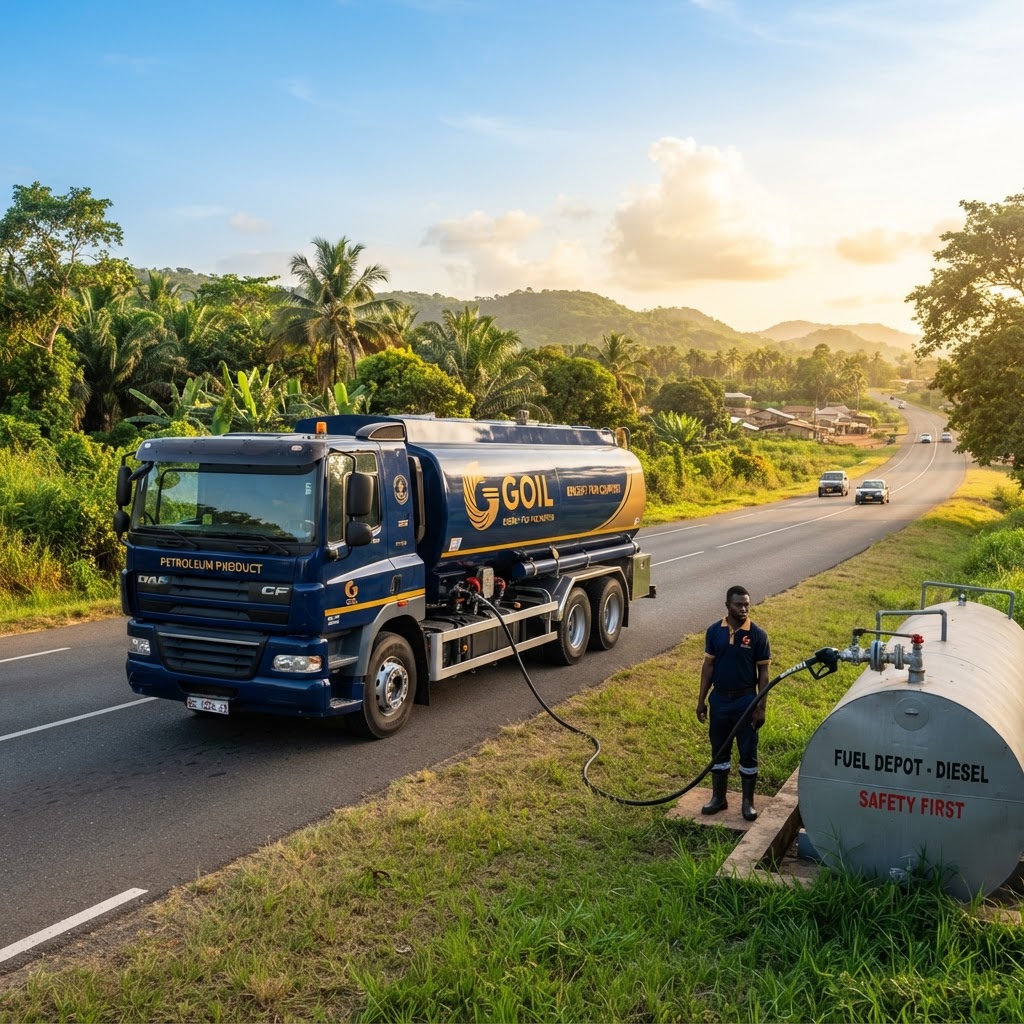
From the depots, petroleum products are transported by road tankers, pipelines, and in some cases by rail or barge to distribution points across the country. This is where logistics expertise becomes a key differentiator. Ghana's road network, while improving, still presents real challenges — especially during the rainy season when rural roads become difficult to navigate.
4. Retail and Direct Supply
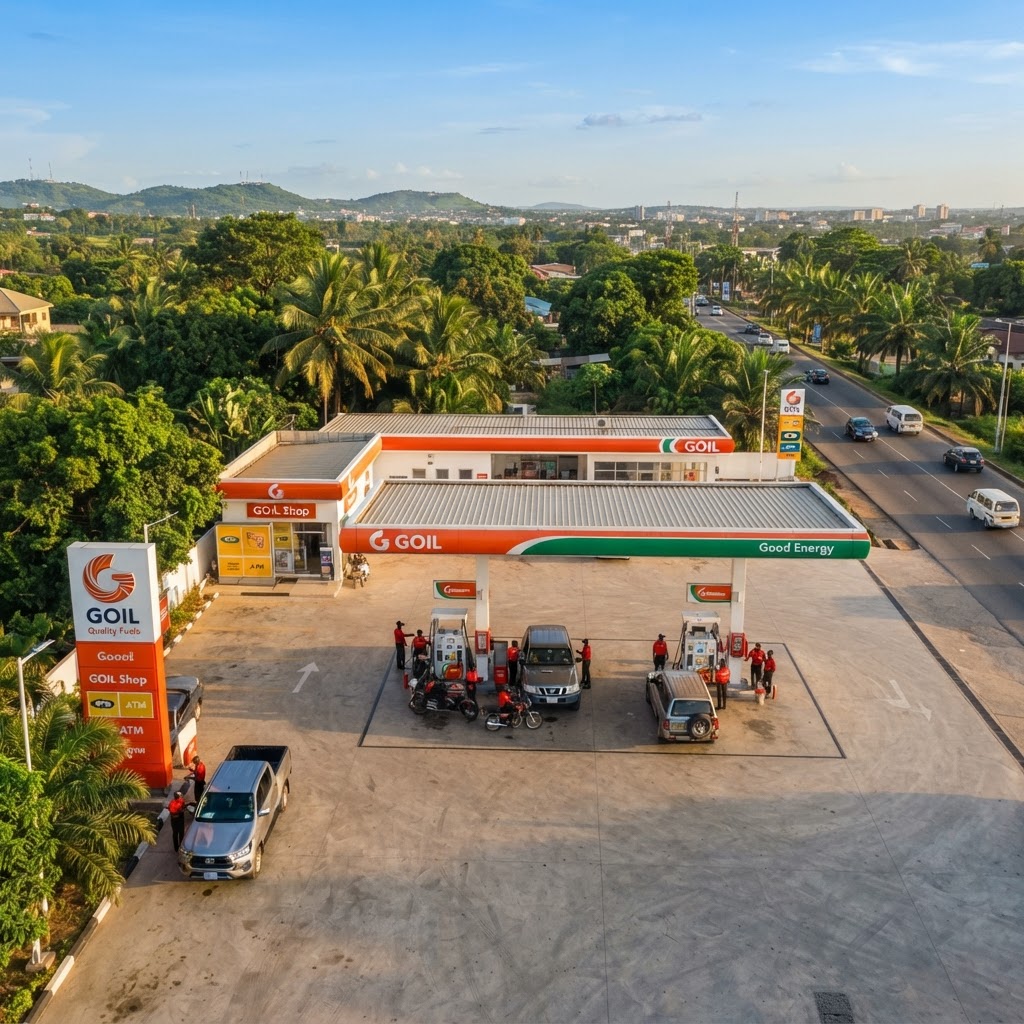
Finally, petroleum products reach the end consumer — either through filling stations, direct bulk delivery to industries, or last-mile distribution to remote communities.
The State of Petroleum Distribution in Ghana
Ghana's downstream petroleum sector has grown significantly over the past two decades. Following the liberalisation of the sector in the 1990s, private companies were permitted to compete alongside state institutions like the Ghana National Petroleum Corporation (GNPC) and Bulk Oil Storage and Transportation Company (BOST).
Today, dozens of licensed oil marketing companies (OMCs) operate in Ghana, but the sector is not without its challenges.
Supply Chain Disruptions
Ghana relies heavily on imported refined petroleum products, making it vulnerable to global price shocks, foreign exchange fluctuations, and shipping delays. When the cedi weakens against the dollar — as it has done in recent years — the cost of fuel imports rises sharply, putting pressure on both distributors and consumers.
Infrastructure Gaps
Despite improvements, Ghana's fuel distribution infrastructure still has significant gaps. Many parts of the Northern, Upper East, and Upper West regions remain underserved. Fuel scarcity in these areas is not just an inconvenience — it affects agricultural productivity, healthcare delivery, and economic development.
Quality Control Issues
Adulterated fuel is a persistent problem in parts of West Africa. Unscrupulous actors sometimes mix diesel or petrol with cheaper substances to increase profit margins, causing serious damage to vehicle engines and industrial equipment. Rigorous quality standards and monitoring are essential to combating this.
Regulatory Compliance
The National Petroleum Authority (NPA) regulates Ghana's downstream petroleum sector. Staying compliant with NPA licensing requirements, pricing guidelines, environmental standards, and reporting obligations is non-negotiable for reputable distributors.
How Gido Oil Ltd Is Redefining Petroleum Distribution in Ghana
Gido Oil Ltd, a key subsidiary of GIDO Group Ltd, has positioned itself as one of Ghana's trusted names in petroleum distribution. With a clear commitment to reliability, quality, and service excellence, the company has built a reputation that speaks for itself.
Reliable Supply Chain Management
Gido Oil Ltd understands that reliability is everything in the fuel business. A client who runs a mining operation, a logistics company, or a hospital cannot afford to wait for fuel. The company has invested in robust supply chain systems that minimise delays and ensure consistent product availability — even during periods of national supply pressure.
Wide Distribution Reach
Operating across multiple regions in Ghana, Gido Oil Ltd has developed a distribution network that extends beyond the major urban centres. The company is committed to improving fuel access in underserved communities, recognising that energy equity is a prerequisite for economic development across Ghana.
Quality You Can Count On
All petroleum products distributed by Gido Oil Ltd meet the required specifications set by the National Petroleum Authority. The company takes product integrity seriously — from the point of receipt to the point of delivery. Clients can trust that what they're getting is exactly what it should be.
Serving Diverse Sectors
Gido Oil Ltd's distribution portfolio spans multiple industries. Whether it's supplying diesel to construction companies, petrol to filling station operators, kerosene to rural distributors, or bulk fuel to industrial facilities, the company has the experience and capacity to handle diverse client needs professionally.
Why Petroleum Distribution Matters for Ghana's Development
Energy is the backbone of development. Without reliable access to petroleum products, Ghana's economic growth aspirations — from industrialisation to modernising agriculture — simply cannot be achieved.
Fueling Agriculture and Food Security
Farmers across Ghana depend on diesel-powered irrigation pumps, tractors, and processing equipment. Delays in fuel supply translate directly into crop losses and food insecurity. Efficient petroleum distribution is, quite literally, a food security issue.
Enabling Industry and Manufacturing
Ghana's manufacturing sector, though still developing, depends on reliable energy inputs. Backup generators running on diesel are a reality for most businesses given the challenges with the national grid. Without steady fuel supply, production stops — and so do jobs.
Supporting Transportation and Commerce
Ghana's road transport network moves people and goods every day. The fuel that powers these vehicles flows through the distribution chains managed by companies like Gido Oil Ltd. Disruptions in distribution create ripple effects across the entire economy.
Powering Healthcare Facilities
Hospitals and clinics rely on generators to power life-saving equipment during power outages. Reliable diesel supply is not just a business matter in this context — it's a matter of life and death.
The Future of Petroleum Distribution in Africa
Africa's energy landscape is evolving rapidly. While renewable energy is gaining ground, petroleum products will remain central to Africa's energy mix for decades to come — especially in markets like Ghana where infrastructure for electric vehicles and alternative fuels is still nascent.
The future belongs to petroleum distributors who invest in technology, compliance, and customer service. Digital fuel management systems, real-time logistics tracking, automated inventory control, and data-driven supply planning are becoming the new standards for excellence in the industry.
Gido Oil Ltd is committed to growing alongside this evolution — embracing innovation while staying grounded in the core values of reliability, integrity, and service to the Ghanaian people.
Partnering With Gido Oil Ltd
Whether you're a business looking for a reliable bulk fuel supplier, an entrepreneur seeking a petroleum distribution partner, or an organisation that needs consistent energy supply to keep your operations running — Gido Oil Ltd is ready to serve you.
As part of the broader GIDO Group Ltd family, Gido Oil Ltd combines the agility of a focused energy company with the resources and reputation of a trusted Ghanaian conglomerate. Our team brings deep sector knowledge, strong supplier relationships, and an unwavering commitment to doing the job right.
Petroleum distribution isn't just our business. It's our contribution to Ghana's growth — one delivery at a time.